By Robert Brza
•
February 23, 2026
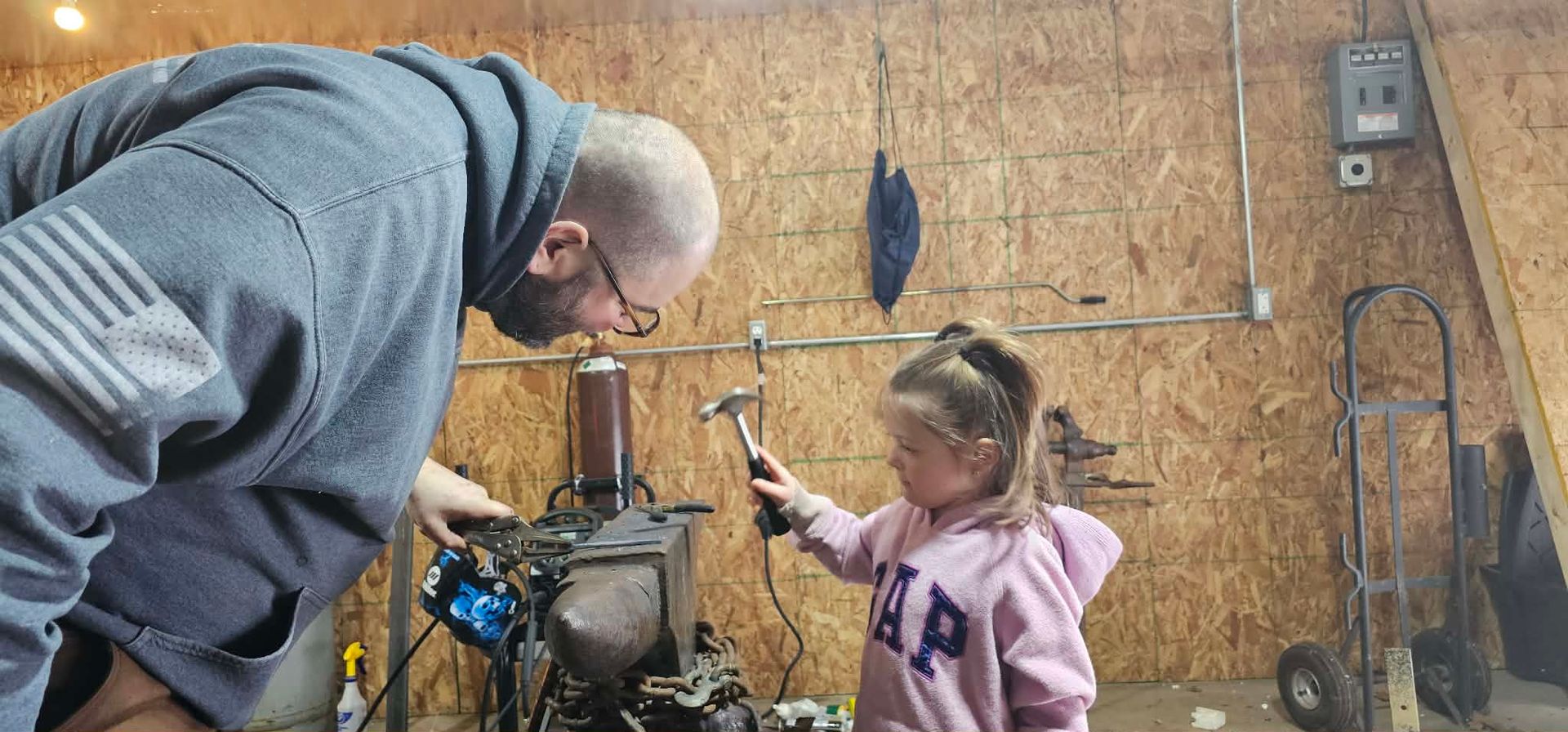
Yesterday, my granddaughter stood at my anvil. She’s small enough that the hammer still looks oversized in her hand. The shop smelled like hot steel and faint propane. The forge roared with that steady blue flame — clean, controlled, almost surgical. Sparks snapped in the dim light like tiny rebellions against gravity. It was the first time she’d ever hammered anything. She was nervous. You could see it in the way she held her breath before that first strike. Steel doesn’t care about your feelings. Fire doesn’t negotiate. And a hammer will absolutely let you know if your aim is off. But here’s what I told her: Blacksmithing isn’t about brute strength. It’s about finesse. It’s about leverage. It’s about understanding that you don’t overpower the metal—you guide it. You read it. You work with it. Life’s the same way. Family’s the same way. Heat Steel doesn’t move unless it’s brought to temperature. Cold steel resists. It cracks. It fights you. Heat makes it workable. My propane forge burns clean. There’s no romance in black smoke and cinders — just a focused, controlled flame doing its job. It reminds me that not all fire has to be chaotic to be transformative. In a family, heat comes in different forms. Sometimes it’s joy. Sometimes it’s pressure. Sometimes it’s the hard seasons that none of us would choose but all of us have to walk through. Those moments soften us. They make us malleable. They make change possible. The mistake is thinking heat is punishment. It’s not. It’s preparation. The Hammer The hammer is not the enemy. It’s the shaping force. When she struck that glowing piece of steel for the first time, she hit too hard. The metal flattened awkwardly. She looked up at me like she’d ruined it. You can’t ruin hot steel that easily. We adjusted. Lighter blows. Better angle. Let the anvil do the work. Guide the force instead of forcing the guide. In family, the “hammer” can look like correction. Boundaries. Hard conversations. Accountability. None of it feels good in the moment. But without shaping, you don’t get form. You just get raw material. And raw material, left alone, never becomes anything beautiful. The Anvil An anvil doesn’t move. It stands. It absorbs. It supports. Every family needs an anvil. Someone steady. Someone consistent. Someone who can take the impact without cracking. Someone who holds the line when things get chaotic. Yesterday, I realized something I didn’t expect. I won’t always be the anvil. One day, she will. Finesse Over Force When she finally found her rhythm, it was poetry. Not because she was powerful. Because she was attentive. She watched the color of the steel. She adjusted her stance. She let the weight of the hammer fall instead of muscling it down. That’s when the pendant began to take shape. We like to think strength in a family is about dominance or volume or control. It isn’t. It’s about restraint. It’s about timing. It’s about knowing when to strike and when to step back into the fire for another round of heat. Finesse builds what force can’t. The Quench When the shape was right, we quenched it. Steam exploded upward. That violent hiss always sounds like something alive fighting back. But what’s really happening is transformation. The structure changes. The steel becomes something stronger than it was before. That little pendant—once just a scrap of metal—became something she’ll wear. It carries hammer marks. It carries imperfection. It carries the story of the day she was brave enough to lift a hammer and trust the fire. Families are forged the same way. We are shaped by heat. Refined by impact. Strengthened by seasons that feel overwhelming. And marked—beautifully marked—by the hands that loved us enough to guide us. Yesterday wasn’t just about making jewelry. It was about passing down more than a skill. It was about showing her that creation requires patience. That fear is normal. That strength doesn’t mean violence. That you can take something raw and, with care and intention, make it meaningful. One day, long after my forge goes quiet, she may remember the steady roar of that blue flame and the ring of steel on steel. And maybe she’ll remember this too: You don’t become a family by accident. You forge one.